Aucun produit dans le chariot.

Day of the Dead: Celebration, History & Origins Who celebrates the Day of the Dead?
From pre-Columbian times, El Día de los Muertos, the Day of the Dead has been celebrated in Mexico and other Latin countries. This is a very special ritual. It is the day on which the living remember their departed relatives. Sometimes, when people of other cultures hear for the first time about the celebration, they mistakenly think it must be gruesome, terrifying, scary, ugly, and sad. So, what is the Day of the Dead? It is a beautiful ritual in which Mexicans happily and lovingly remember their loved relatives who have died. Much like when we go to a graveyard to leave some lovely flowers on the tomb of a relative From the beginning, man has needed to explain the mystery of life and death. Many civilizations and cultures have created rituals to try and give meaning to human existence. · Where do we come from?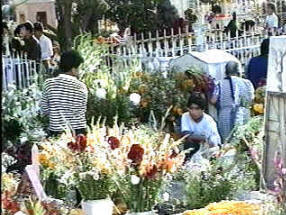 · Why does life end? · Is there "life" after death? · If so, what kind of "life"? · Can we do something while alive to enjoy "life" after death? To the indigenous peoples of Mexico, death was considered the passage to a new life, so the deceased were buried with many of their personal objects, which they would need in the hereafter. Many times, even their pets were sacrificed so they could accompany their masters on their long journeys. When is the Day of the Dead? On November 1st and 2nd, Mexico celebrates the Day of the Dead, and this ritual is especially impressive in two very special places: Mixquic, a small town in Mexico City, and Janitzio, a charming little island in the state of Michoacan.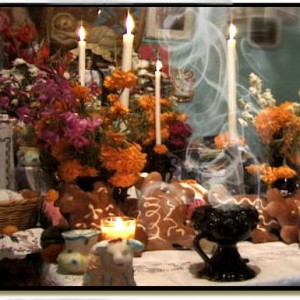
Day of the Dead Ofrenda
The first inhabitants of Michoacan, the state where Janitzio is located, thought that because of its extraordinary beauty, this lake was the door to heaven and that the gods used to come down to earth through it. One of the biggest and richest kingdoms of pre-Hispanic times was established in this Mexican state, the Purepecha Empire. It was able to maintain its independence from the powerful Aztecs, who at the time controlled most of Mesoamerica and Middle America. Like the rest of the pre-Hispanic civilizations, these people succumbed to the Spanish conquerors, who imposed their customs, language, and Catholic religion. The native people acquired these new cultural elements but blended and adapted them to their own culture; from this fusion, new beliefs and rituals were born, such as the Celebration of the Day of the Dead. Michoacan is probably one of the most representative of the merging of the two cultures, observed in its magnificent Spanish architecture, its spacious plazas or squares, and the folklore and religious fervor of their traditions. 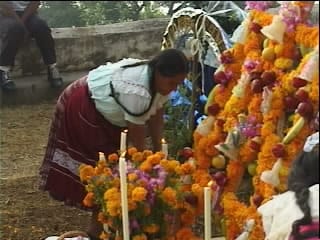 Near the last days of October, the entire region prepares for the great fiesta of Los Días de Muertos, the Days of the Dead. The square fills with stands that offer all types of colorful figures allusive to death, the most popular made of sugar. [caption id="attachment_3840" align="aligncenter" width="320"]
 Cempasuchil Flower[/caption] Markets are filled with the cempasúchil flower, an orange marigold used by the Aztecs to remember their dead. Its color represents the hues of earth and is used to guide souls to their homes and altars. Many families grow their cempasúchil, believing that doing so is more appropriate for their offerings. Through their work and care, these flowers grow and will finally adorn their ofrendas and tombs. Very early in October, bakeries all over the country offer the delicious Pan de Muerto, Day of the Dead bread made with flour, butter, sugar, eggs, orange peel, anise, and yeast. The bread is adorned with strips of dough simulating bones and a small round piece of dough at the top that symbolizes teardrops. These breads are placed on the altars or ofrendas and taken to the graveyard's tombs. [caption id="attachment_594" align="aligncenter" width="719"]
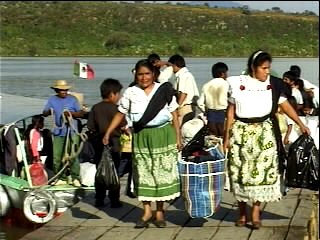
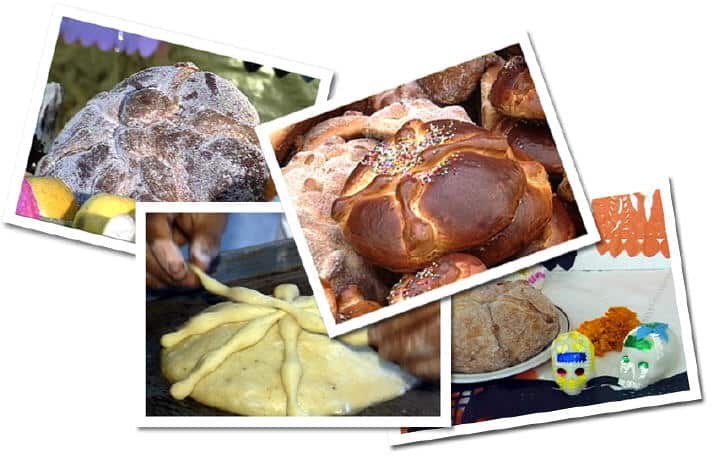 Pan de Muerto ~ Day of the Dead Bread[/caption] Another traditional dish prepared for the celebration is the tasty Calabaza en Tacha, Sweet Pumpkin, a dessert with pumpkin, cinnamon, piloncillo, and dark sugar cones. Janitzio is one of the islands on Lake Patzcuaro, with 1,500 inhabitants. Little white houses, all with red tile roofs, crowd the island, and at the summit, the stone statue of one of the fathers of Mexico’s Independence, José María Morelos, dominates the view. To get to the island, it is necessary to take launches that constantly go to and from Janitzio, carrying passengers, food, flowers, and merchandise. There is no busier time for the boats than on the days of the dead. On the eve of El Día de Muertos, the boats are loaded with people who are very busy taking the flowers and essential articles for the celebrations. The island is dressed up with beauty and mysticism! [caption id="attachment_3832" align="aligncenter" width="533"]
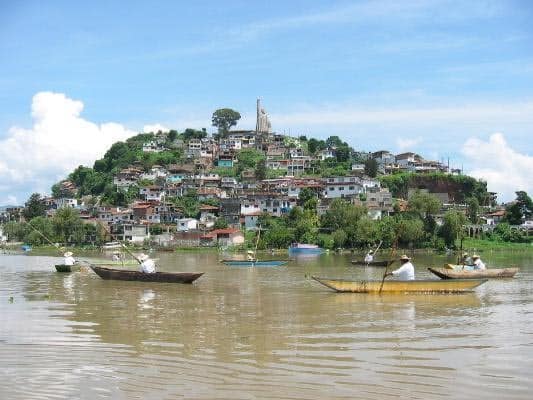 Janitzio Island[/caption] On the lake, one can also see the fishermen with their traditional nets that grace the view. They are called Butterfly Nets. Watching the fishermen go out in groups is a bewitching spectacle, particularly during the early hours of the morning, with the mist and the calming stillness of the lake. The people of Janitzio have conserved this form of fishing, as well as other millenarian customs and traditions that are part of the enchantment of this island. Especially distinctive is the way in which the women dress, and their methods of cooking. In addition to fishing, they complement their economy with the production of handicrafts for sale to the many visitors that come to Janitzio, and in many small inns, they offer the delicious Pescado Blanco, white fish, unique to Lake Patzcuaro. Many of the locals work and study outside the island. Since there is only an elementary school on the islet, when the kids go on to high school they have to attend schools in Patzcuaro. You can imagine how striking it is to see the young students on their rowboats, crossing the lake early in the morning to get to school. By October 31st, all the houses and shops, as well as the docks are decorated with cempasuchil flowers and fruits from this region. The whole community participates enthusiastically in the preparations for this festivity!
  Ofrendas are set up in houses for their dead relatives. Generally, ofrendas are set up on a table covered with a tablecloth and papel picado. They are decorated with sugar skulls, candles, cempasuchil flowers, and paper mache skeletons. Plates with the favorite foods of their dead relatives are also set on the ofrenda. Some have also liquor and cigarettes. On the ofrendas for the deceased children, they place toys in addition to the food. The beautiful wooden arches are made by hand by the families. They are adorned with cempasuchil and fruits for the tombs in the cemetery. A very interesting tradition is that for the first three years that follow the passing away of a person, every November first, it is the godparents of the deceased who decorate the arch. When they finish, they go to the parent's house and lovingly offer it to them. On the morning of November 1st, the ceremony in honor of the Angelitos takes place in the cemetery. [caption id="attachment_3839" align="aligncenter" width="320"]
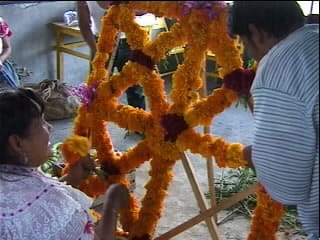 Wood & Cempasuchil Arches[/caption] The little angels or angelitos are the children that died and that could never experience the happiness and sorrows of adulthood. Very early the bells of the church start ringing, calling children’s souls and the living relatives that will attend the ceremony. At 6:00 A.M., in the small chapel of Janitzio, the mass has already begun. Remember, this is fundamentally a Catholic ritual. After mass, the women and children go to the graveyard to clean and decorate the tombs. They bring flowers, bread, and fruits in baskets covered with napkins that they embroidered themselves, as well as the copal, and incense, that they will burn so that the aroma will help guide the returning souls. Each family brings with them in honor of their deceased relatives. What a spectacular view from the island! In the distance, from the graveyard, the fishermen can be seen with their canoes starting their working day. The lake is so peaceful as if welcoming the spirits that are returning home.
 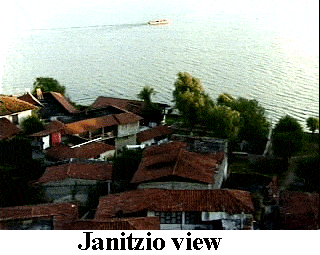 Slowly, and quietly, the cemetery begins to fill up. The music of a band can be heard approaching the graveyard. A family is carrying an adorned arch accompanied by the band. Their son died a few months ago, and this morning is the first Day of the Dead that they will be honoring him. This is why they brought a band with them. Music resonates fills the graveyard. At about 9 AM, the ritual in honor of the deceased children ends. In a couple of hours, at nightfall, the most impressive celebration will begin, the ritual in which the souls of the deceased adults are honored. It is surprising how on such a little island, thousands and thousands of visitors will arrive in order to witness this beautiful rite. In the preceding hours, the carpenters laboriously work to set a stage for the folkloric dances that will be performed as part of the celebrations. At night, with everything ready, the dances begin. The Danza de los Viejitos, Dance of the Old Men, is the representative dance of this region. In pre-Hispanic times this dance was performed as a ritual honoring the Sun. Another popular dance is the Pescado Blanco, White Fish, through which the inhabitants of Janitzio express their gratitude to the lake since fishing is their most important economic activity. Also at night, as a way of expressing their gratitude to God for all the blessings they have been given, the fishermen go out to the lake with their canoes, lighting the way with torches and carrying out an impressive ritual with their butterfly nets.
 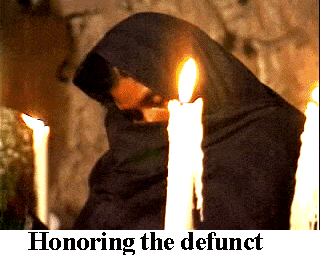 The graveyard of the island is now the place in which living and dead will reunite once again. I can hear the bell at the entrance ringing all night long. It is calling the souls to return and enjoy the splendid ceremony. There are mainly women and children who silently find the tombs of their relatives, on which they place the lovely embroidered napkins and set candles, flowers, and food that their dead relatives so much enjoyed when alive. This is how the vigil goes by, with prayers and chants from the women and children. Meanwhile, the men silently observe what goes on. Their songs and prayers are elevated to the sky, asking for the eternal rest of the souls and for the happiness of the living. The essence of this beautiful ritual is to lovingly and happily remember the dead relatives, and their life, and in this way, give meaning and continuity to human existence. The Day of the Dead is a grand celebration of life itself! May Herz